INVESTMENTS IN START-UPS
10/06/2022
How do you find an investor?
Innovation is one of the areas of business that brings with it the greatest growth and often very large sums of money. Investing in a start-up requires very thorough analysis, but also a commitment of time, a bit of courage and good intuition. Such initiatives include start-ups, which are most often set up by young people, such as students. Often, at the outset, this type of business needs support.
Business angels are extremely valuable in this regard, as they often take a start-up under their ‘wing’. Securing funding, however, is not straightforward – in most cases, start-ups are new projects in their early stages, and anything new often arouses a certain amount of apprehension. All is not lost, though – if you have a good idea, a written business plan, a prepared pitch deck and plenty of determination, you may soon find investors who, just like you, believe in the success of your plans. And who most often invests in start-ups, and how can this be done?
How do you define a start-up?
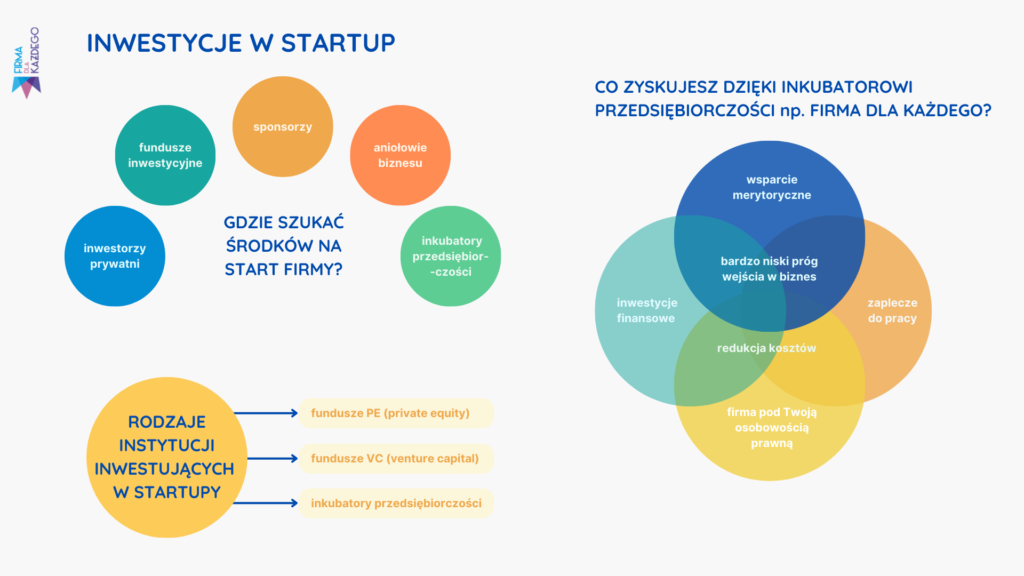
A start-up is a business venture that lacks clearly defined rules and operational boundaries. By its very nature, it seeks to find a business model that will allow it to grow as much as possible and generate profits for its founder. Brands such as Uber and Netflix were once start-ups. The risk associated with a start-up is that it may not actually work out and fail to gain a foothold in the market. If potential customers reject the idea, it usually results in the business closing down. However, if it catches on with the public, it very often brings with it huge brand recognition and substantial earnings. Particularly at the outset, a start-up requires a fair bit of investment. It is only after some time that one can expect a return on investment and significant earnings. Before that happens, however, young entrepreneurs often need support to ‘get the business off the ground’. Hence the search for private investors, investment funds, sponsors, business angels, as well as business incubators, which will be able to invest in the new company.
Investing in a start-up?
One type of organisation that is keen to invest in start-ups is business incubators. These are places that support the development of young companies. They do this through financial investment, but also by providing practical support, such as legal or financial assistance. They often provide workspace as well. One such business incubator is the ‘Firma dla Każdego’ Foundation, which supports young entrepreneurs as they take their first steps in business. The Foundation enables a significant reduction in the costs of running a business. Furthermore, it enables people to run a business under their own legal identity and without the need for registration. The barrier to entry into business is therefore very low for people with ideas but without substantial start-up capital.
Another type of company investing in start-ups are VC (venture capital) funds. These are intermediaries who connect young entrepreneurs with private or institutional investors. These individuals entrust their funds to VC firms, which in turn seek out innovative businesses – most often in the new technology sectors – that are worth investing in. However, securing an investor from a VC firm is quite difficult and usually takes between 3 and 12 months, involving several stages. To secure funding, it is essential to present a so-called investment teaser or pitch deck – a condensed version of the business plan focusing on the key elements designed to attract potential investors.

Another type of firm investing in start-ups are private equity (PE) funds. These are entities that invest in specific ventures and then expect to make a profit when they exit the investment. In private equity, the necessary funding is provided by various types of state institutions, financial institutions, companies and individuals.
As you can see, there are at least several options for financing start-ups. Grants and funding from the public sector or the European Union are also available. However, the most accessible option for the average person is to seek support from a business incubator, which not only provides funding for a fledgling business but also offers comprehensive support.
Where can you look for start-up funding?
There are at least several places where you can secure funding. It is worth searching online, looking into the opportunities offered by the local council, various government departments, and private companies. It’s worth drawing on the support and experience of entrepreneurs who openly offer their help to growing businesses. Often, companies with an established market position are looking for new solutions for their own businesses. Perhaps your start-up will help them grow, and the benefits of such a partnership will prove to be mutual. It is important to develop a sound strategy and business plan for your start-up, which you can present at a meeting with potential investors.
Read also: What is a start-up?

Przedsiębiorca od prawie 20 lat. Związany m.in. z branżą inkubatorów przedsiębiorczości. Od ponad ośmiu zarządza Fundacją Firma Dla Każdego, która prowadzi jeden z największych inkubatorów w Polsce. Specjalizuje się w zagadnieniach prowadzenia i rozwoju biznesu, legalizacji pobytu i pracy, a także aspektami podatkowymi prowadzenia firmy.
Want to start a business without the paperwork?
Get in touch — we will help you choose the best way to run your business.
Get in touch