RUNNING YOUR OWN BUSINESS – IS IT WORTH IT?
20/02/2023
The prospect of running your own business is always incredibly tempting. In your mind’s eye, you’re probably already picturing excellent, dedicated staff working alongside you on major projects. However, the reality – particularly in the very early stages – is unlikely to be quite so rosy.
That’s why, before you decide to run your own business, you should read this article. We’ll show you the pros and cons of this option, as well as the costs involved in running your own business. You’ll also find out how to set up your own business, step by step. Let’s get started!
Running your own business – the downsides
We’ll start, somewhat provocatively, with the downsides, so that we can later show you that there are, in fact, far more upsides. But what’s stopping you from submitting your CEiDG-1 application and becoming a business owner? What’s holding you back? We’re well aware of all the concerns that new entrepreneurs have. We’ll bring them all together here.
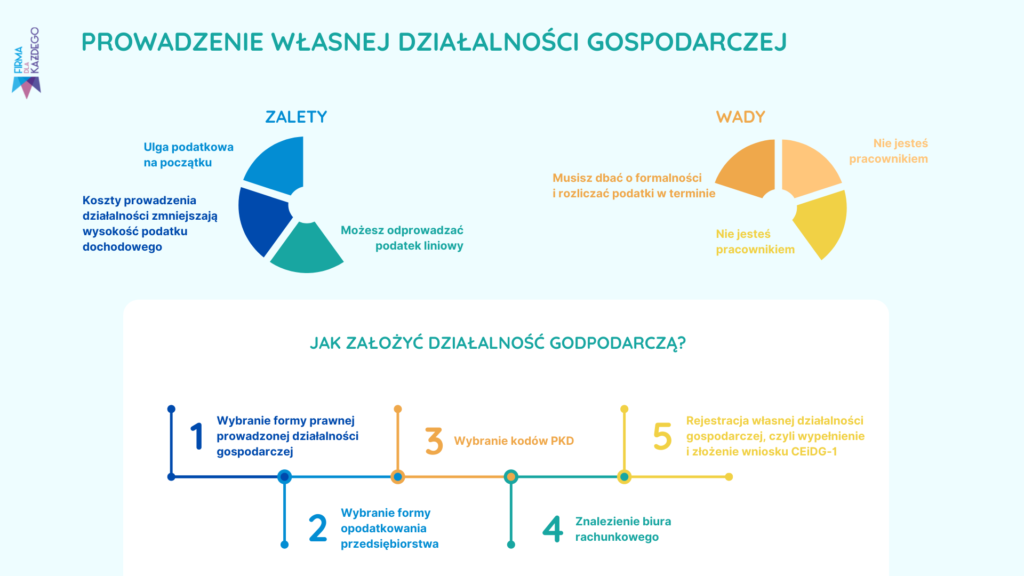
- You’re not an employee. In practice, this means you can’t count on paid holiday or overtime pay.
- You’ll have to sort out the paperwork and file your tax returns on time. Nobody likes keeping track of deadlines and managing their finances in general. You can do this yourself or hire an accountancy firm.
- Irregular income and no guarantee that the business will succeed. Anyone who has ever provided services for money knows that there are clients who either don’t pay at all or only do so after many weeks, or even months. The result is that even though you have no money in your account, you still have to pay social security contributions, taxes and other charges. Nobody cares what your financial situation is.
What are the benefits of running your own business?
- A tax break at the start. For the first 6 months, you don’t pay social security contributions, and for the following 24 months, you benefit from reduced contribution bases. Make the most of this time and try to grow your business as much as possible. Then, the prospect of having to pay much higher social security contributions in the future won’t seem quite so daunting.
- Business running costs reduce your income tax liability. You’re entitled to deduct business expenses from your income. These might include, for example, the cost of fuel, mobile phone bills, internet charges or the purchase of a printer.
- You can pay a flat-rate tax. It stands at 19 per cent regardless of your income. This way, you can legally avoid the second tax bracket. The higher your income, the more advantageous the flat-rate tax will be for you.
Setting up your own business step by step – what do you need to do?
- Choosing the legal form of your business.
- Choose the tax regime for your business.
- Selecting PKD codes.
- Finding an accountancy firm.
- Registering your business, i.e. completing and submitting the CEiDG-1 application.
- Opening a bank account and having a company stamp made.

The last step is optional, as there is no legal obligation to do so. Completing the basic formalities will take you no more than a day. So, if you know that running your own business is worth it, don’t delay any longer – set up your business or take advantage of a business incubator’s services.

Przedsiębiorca od prawie 20 lat. Związany m.in. z branżą inkubatorów przedsiębiorczości. Od ponad ośmiu zarządza Fundacją Firma Dla Każdego, która prowadzi jeden z największych inkubatorów w Polsce. Specjalizuje się w zagadnieniach prowadzenia i rozwoju biznesu, legalizacji pobytu i pracy, a także aspektami podatkowymi prowadzenia firmy.
Want to start a business without the paperwork?
Get in touch — we will help you choose the best way to run your business.
Get in touch